
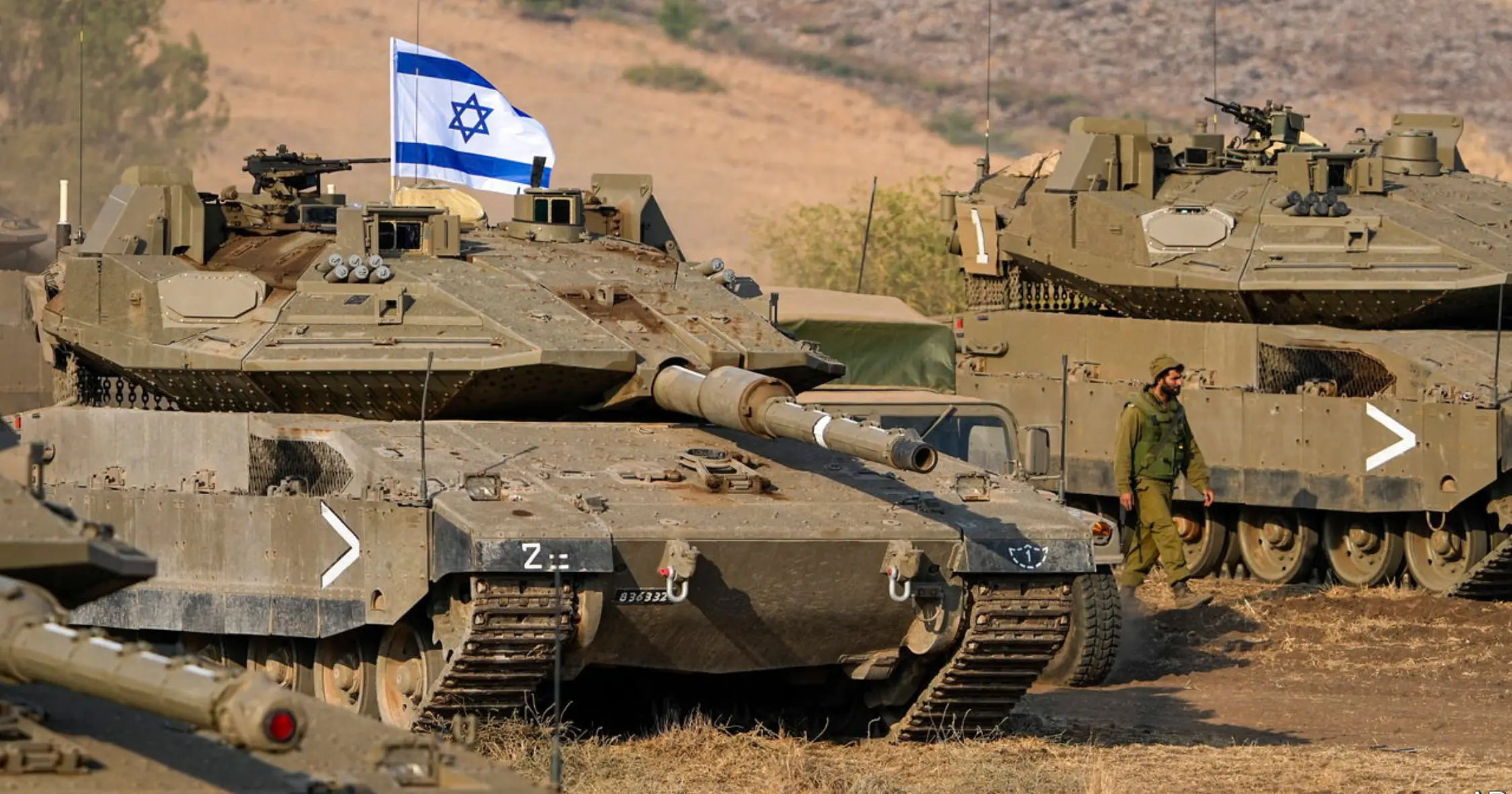
The war between Israel and Hezbollah becomes dangerous day by day that increases the fear of people. Number of missiles and rockets have been fired from Heznollahafter the barbaric Hamas attack against Israel on October 7. The direction of these missiles is from southern Lebanon into northern Israel. Furthermore, the situation also became critical because of Israel’s recent fatal strikes against top Quds Force generals in Damascus.
The Middle East Monitor says that Israel’s Defense Minister, Yoav Gallant, is thinking about how to get the Israeli people ready for a big war with Hezbollah. But there’s a question: Where’s the United Nations Interim Force in Lebanon (UNIFIL)? They’ve been in Lebanon for a long time to stop fighting between Israel and Lebanon. Why aren’t they doing anything now?
It’s not because they don’t have any super authority. The UNIFIL has been in Lebanon since 1978, with 10,000 people, to keep peace. They are doing their best to assist the government of Lebanons and also want to bring peace back. In a perfect world, UNIFIL would use this power to stop Hezbollah from gaining more control in southern Lebanon.
Instead, UNIFIL has ignored what Hezbollah is doing. Hezbollah has been building tunnels along the Blue Line, sneaking into communities in southern Lebanon, and storing some of its 150,000 rockets and missiles near Israel’s border. In December 2023, Hezbollah launched rockets very close to a UNIFIL base, probably hoping Israel would attack the base. UNIFIL couldn’t do much and just said it was “unacceptable.” Recently, a Hezbollah bomb hurt some peacekeepers. UNIFIL’s response was to stop patrolling for three days.
According to UN Security Council Resolution 1701, UNIFIL also assists the Lebanese Armed Force( LAF). This is for the sake of making an area between the Blue Line and the Litani river secured from weapons and armed people. This resolution was ended in 2006 after the war between Israel-Hezbollah. But the LAF’s support for Hezbollah’s buildup shows that UNIFIL isn’t doing its job right. UNIFIL is supposed to work with the LAF, but it doesn’t make sense because the LAF ignores what Hezbollah is doing and even stops UNIFIL from putting up surveillance equipment. A former Israeli Brigadier General, Assaf Orion, has shown how the LAF helps Hezbollah hide its illegal military activities.
Now the question arises what’s the reason behind the UNIFIL failure. Lack of strong political determination is one of the ground reasons for it. The UN often shows bias against Israel and Jewish people, which affects how it handles situations. While the military leaders running UNIFIL might not have the same biases, they might be influenced by political advisors at the UN headquarters.
Think about it: what military leader would want to start a fight with the Middle East’s most powerful terrorist group on their own turf? Especially when the troops they have are from places like China, Ghana, and Indonesia, who don’t have much at stake in the Middle East. It is too easy to ignore all of the tough choices that include dealing with landmines, helping animals caught in fights, and doing patrols with the Lebanese Armed Forces (LAF), who haven’t done much against Hezbollah. So UNIFIL does not have any fear.
This weakness of UNIFIL compels us to think about its existence. Some have said it before; Eugene Kontorovich, an Israeli legal expert, thinks UNIFIL shows all the UN’s problems: expensive, doing more than it should, and not answering for its actions, all with a bias against Israel. In 2017, the Trump government said they’d end UNIFIL’s job if it couldn’t look for Hezbollah weapons more broadly. They got the power to do it, but it didn’t help. Hezbollah is stronger now than before, right where UNIFIL works.
In August this year, UNIFIL’s job will be up for review. The region won’t get worse without it. If the Biden government wants to keep UNIFIL, they should demand it does something real against Hezbollah. Otherwise, Americans will have wasted $143 million on something that doesn’t stop war but might even help it happen.



Recent Comments